
Insights · Circularity · September 2026

What survives the next fitout?
Soundscaping is one part of the acoustic design. Working alongside absorption, sound isolation and layout, it helps the project team shape the listening conditions each space needs. At churn, the useful question is which of those parts can be kept.
A new tenancy can mean a new acoustic layout. Partitions, screens and ceiling treatments that suited the previous plan may need adapting, relocating or replacing.
The circularity question is what can stay, what can move, and what genuinely needs replacing. A soundscaping system belongs in that assessment alongside the physical acoustic treatments.
Reverberation and speech privacy
Two acoustic considerations matter to this argument: reverberation and speech privacy. Reverberation is addressed with absorption, which is material and always will be. Nothing here argues for taking absorption out of a room that needs it, and a soundscape does not soften a hard room.
Speech privacy is a ratio between the speech that carries and the background it is heard against. A controlled background sound level provides another way to support speech privacy, alongside the physical acoustic design. The cost case for the sound layer sets out that trade for the quantity surveyor. This article is about what it means at the next strip-out.
What stays in the ceiling, and what stays in software
A soundscaping system is two things. The material part is a set of networked loudspeakers and acoustic sensors in the ceiling, ordinary audiovisual hardware sourced through existing Australian AV distribution, on the same cabling the AV package already runs. The system still has hardware. Its potential advantage here is reuse and adaptability, not being immaterial. The other part is the zoning: which areas carry which content, at what level, with what behaviour across the day. That part lives in software, and zone behaviour after handover is changed there rather than by returning to the rack.
Where the existing equipment remains suitable, a new fitout can retain it and revise the soundscape zones, content and levels. Changes to the layout may still require equipment relocation, acoustic reassessment and recommissioning. The opportunity is to reuse a working system rather than assume it must be replaced.
Absorption planned as something added rather than applied moves with a tenancy in the same way: curtains, rugs, upholstered furniture, freestanding screens, panels fixed to new joinery. We work alongside the acoustic treatment on a project rather than in place of it, and the reuse question is worth asking of every part of the acoustic layer, not only ours.
Where it has already mattered
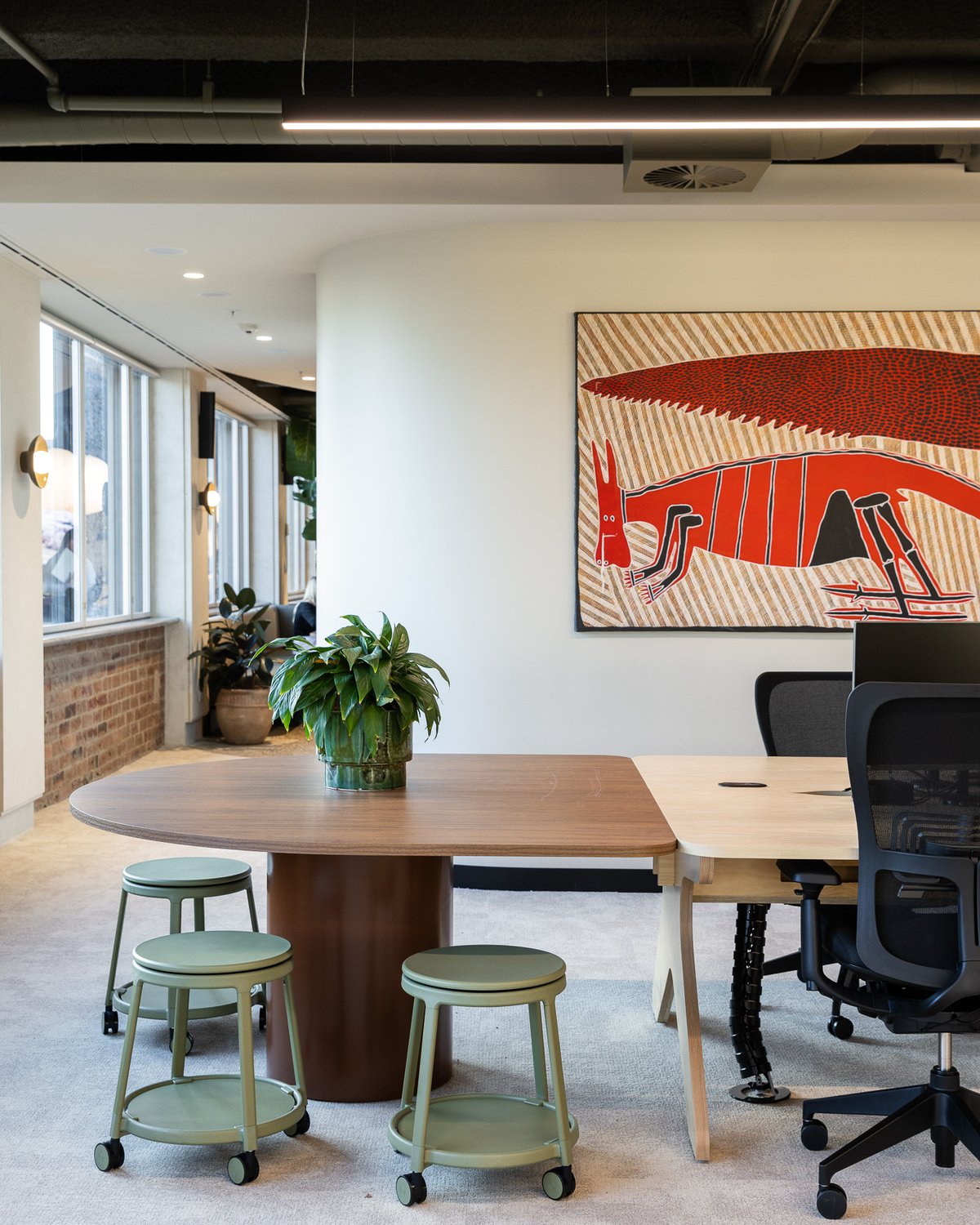
At NSW Teachers Federation’s Federation House workplace, original columns, beams and brick remain exposed. Soundscaping was integrated without covering those surfaces, using pendant and in-ceiling loudspeakers to suit the existing ceiling conditions. Reverberation treatment remained a separate acoustic consideration.
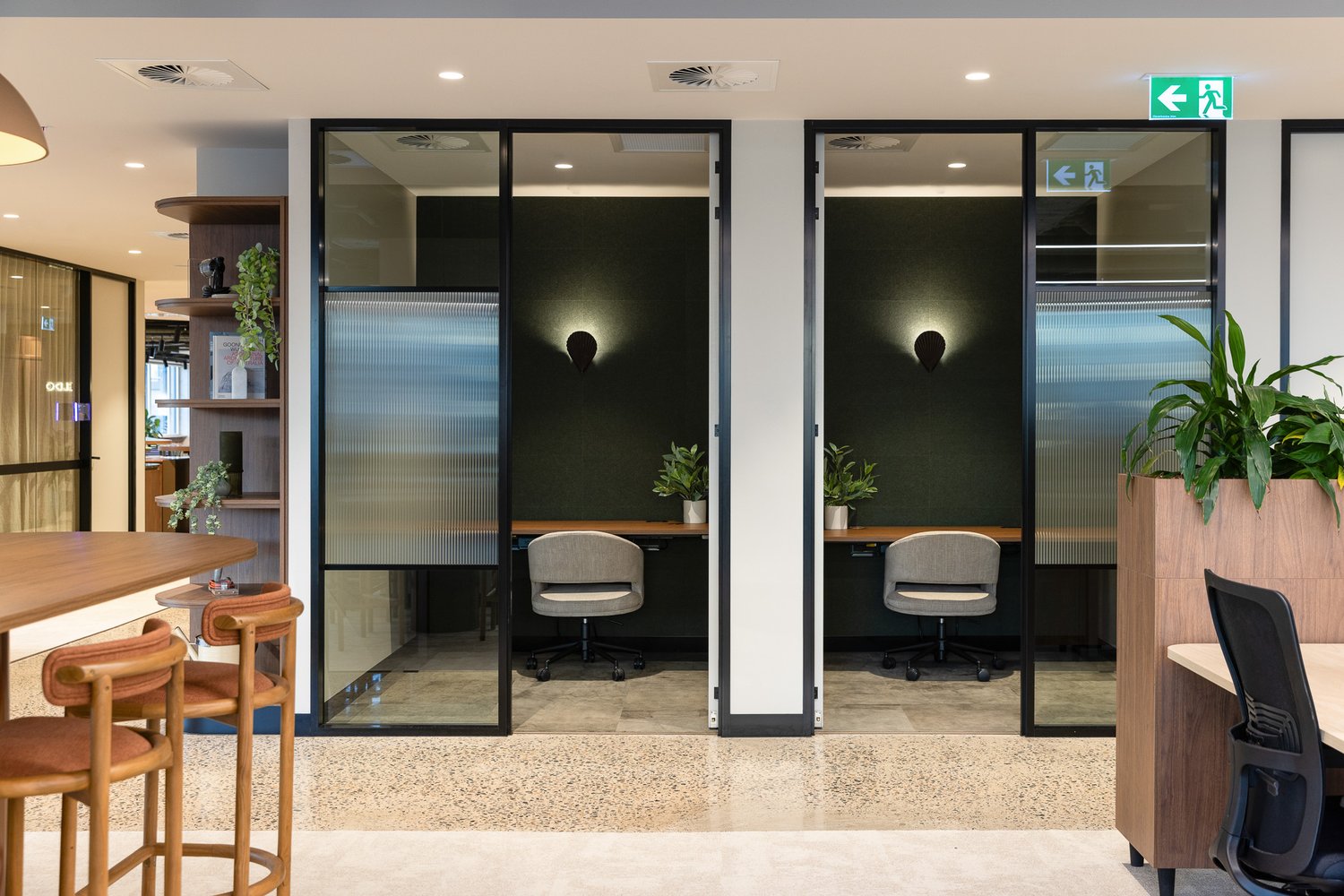
Sheldon Interiors’ Sydney headquarters, certified WELL Gold and designed toward a 5 Star Green Star rating, coordinated the acoustic design so that soundscaping worked alongside the physical treatment. Green Star rewards using less. WELL rewards how a space treats the people in it. Sound was part of how the project reconciled them.
Write reuse into the next fitout brief
Assess which loudspeakers, sensors and other system components can remain, which need relocating, and which need replacing. Rework the zones around the new activities, then reassess and recommission the acoustic environment.
Retain or reuse suitable absorption and isolation elements alongside it. The circularity opportunity is to preserve what still works and change what the new layout requires.