
Education
Listening spaces, designed around learners
We design soundscapes for libraries, classrooms and shared learning spaces, alongside acoustic treatment, isolation and layout. Each room starts with how it is used and who learns there.
In practice
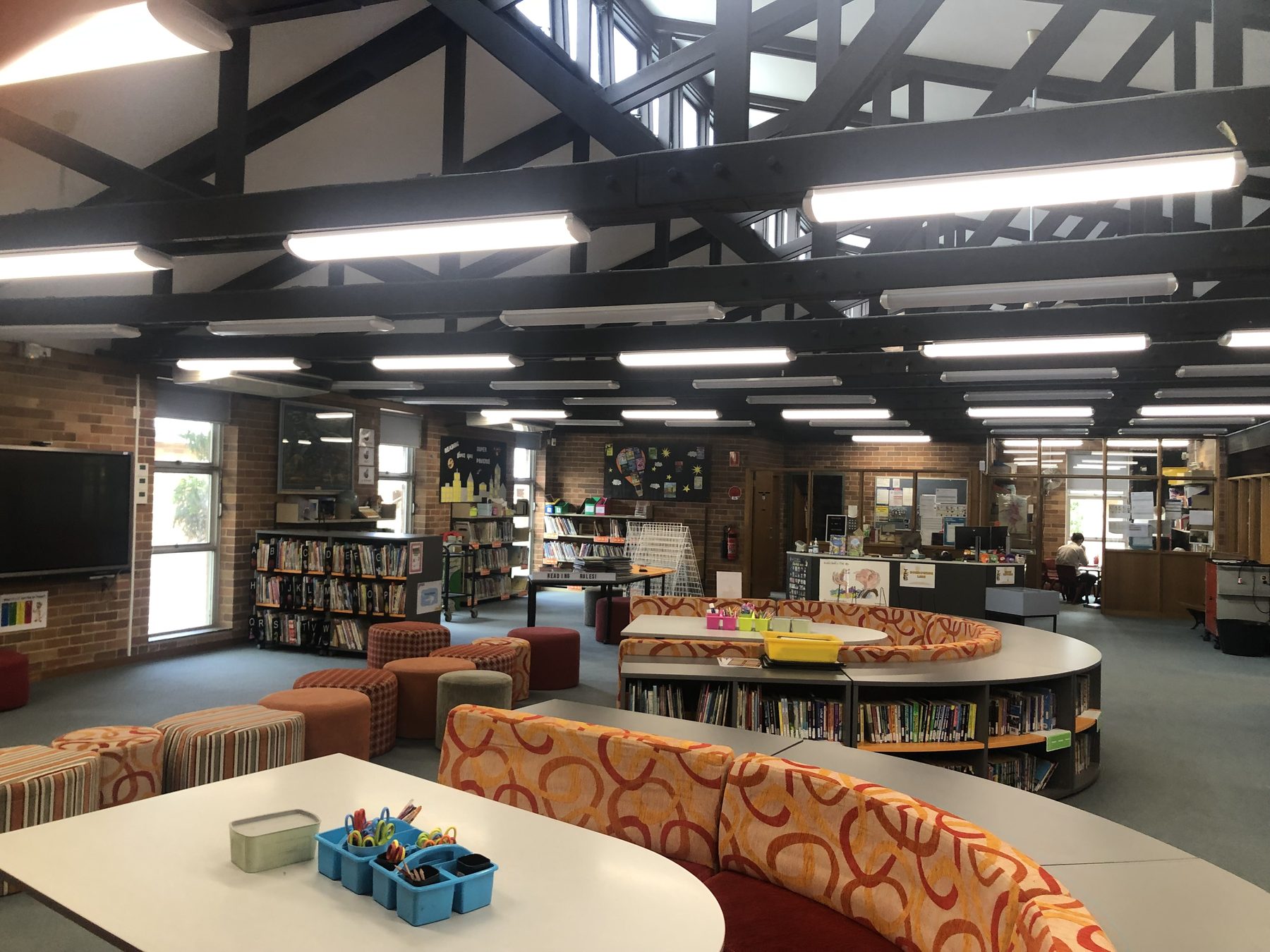
Gymea North Public School
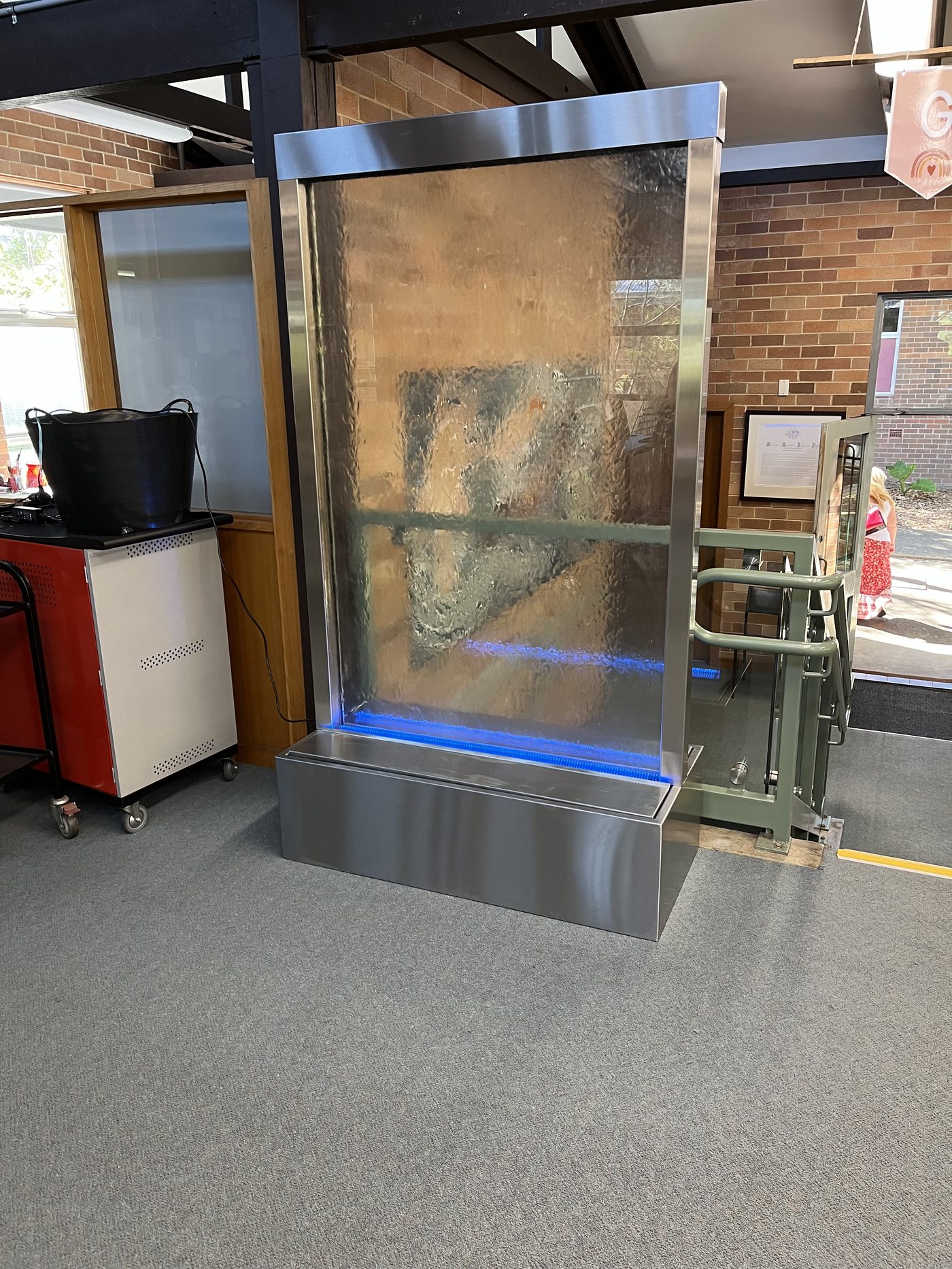
Library and classroom soundscapes, with different settings for different activities. A sealed water feature brings another sensory element into the school.
Explore the project →How we approach your school
The room, the lesson, the learner
Start with the room
We assess reverberation, background sound and teaching activities against the applicable acoustic requirements, including learners’ additional needs.
Keep control in the classroom
Teachers can choose the setting for the lesson, including no added sound. Libraries and larger shared spaces get their own zoning strategy.
Design a sense of place
Custom soundscapes draw on Australian environments and, where a school wants it, content developed with local Elders.
Our work is the design and measurement of listening conditions. We do not promise higher grades or treatment of a condition.
From the school
“The students and teachers love the soundscaping. It’s really helped invigorate the different spaces. The ability to change themes has been great and allows us to provide a more calming or energetic experience when required.”
Michael Brown, Deputy Principal, Gymea North Public School
Supporting your project
Questions and evidence
We assess the room before specifying sound. Research on classroom noise informs that work; studies of selected natural sounds do not establish higher grades or benefits for every learner.
The clearest local finding
A three-year study across six Victorian primary schools measured open-plan classrooms at 5.4 decibels louder than enclosed ones, 62.1 against 56.7 dB LAeq. Children in the noisier rooms gained reading fluency at roughly half the rate of their peers: 7.2 words per minute against 14.0.
Open-plan rooms differ from enclosed rooms in more than acoustics, so this is an association with noisier classrooms rather than an isolated acoustic effect. It is evidence for assessing the room, not evidence that added sound raises results.
Rance, Dowell & Tomlin (2023), npj Science of Learning 8:9. DOI 10.1038/s41539-023-00157-y. Full detail and sources below.
Is this another thing for teachers to manage?
What about children who find sound difficult?
Where should a school start?
How is it funded?
Acoustic requirements and inclusive design
The gap
Different learners need different listening conditions
We assess each learning space against the applicable acoustic requirements, taking account of room use, teaching activities and learners’ needs. Where relevant, additional guidance such as the UK’s BB93 informs the project brief.
New Zealand’s Designing Quality Learning Spaces guidance covers inclusive design for students with hearing impairment, low vision and learning difficulties, and sets its mandatory acoustic requirements to apply universally, with bespoke acoustic design where a special unit needs it. Across Singapore, Hong Kong and the wider region we design to the same criteria, using WELL and the ISO acoustic standards as the common reference where local guidance is lighter.
So it falls to the school, and to whoever is designing the room, to decide that some children need better than the minimum.
Classroom noise: findings and sources
Education
Children do not hear speech in noise the way adults do
A child does not hear speech in noise the way you do. In the fluctuating, speech-like background that fills a real classroom, children’s ability to understand what is said does not reach adult levels until around the age of ten, and younger children need a signal five to seven decibels cleaner than an adult to hear equally well.
And they do not tell you. Children consistently under-report how much the noise is affecting them.
Klatte, Bergström & Lachmann (2013), Frontiers in Psychology 4:578. DOI 10.3389/fpsyg.2013.00578. Klatte, Lachmann & Meis (2010), Noise and Health 12(49). DOI 10.4103/1463-1741.70506
The Australian evidence
It shows up in reading
A three-year study across six Victorian primary schools measured open-plan classrooms at 5.4 decibels louder than enclosed ones, 62.1 against 56.7 dB LAeq.
Children in the noisier rooms gained reading fluency at roughly half the rate of their peers: 7.2 words per minute against 14.0. The children most affected were those with the weakest attention and the greatest difficulty hearing speech in noise.
Rance, Dowell & Tomlin (2023), npj Science of Learning 8:9. DOI 10.1038/s41539-023-00157-y. 146 completers, effect size 0.34, p < 0.001, 95% CI 3.7–10.0 words/min. Open-plan rooms differ from enclosed rooms in more than acoustics, so this is an association with noisier classrooms rather than an isolated acoustic effect.
Internationally the picture agrees: a pooled analysis of 21 studies found a moderate negative association between classroom noise and academic performance, strongest in children aged six to twelve.
Fretes & Palau (2025), Applied Sciences 15:4128, d = −0.46 (95% CI −0.54 to −0.38). DOI 10.3390/app15084128
Natural sound: studies, limitations and sources
What the research does and does not support
The standards have not caught up, and neither has the evidence
We are more cautious on this page than on any other, because the audience is children and because the honest position is genuinely mixed. Two things here are well evidenced. One is not, and we say which.
What the research supports, and what it does not. Classroom noise is well evidenced as harmful to attention, memory and reading, and it harms some children a great deal more than others. Selected natural sounds have improved attention and short-term memory for children under laboratory conditions. What has not been done is an intervention study introducing nature sounds into real classrooms, so we will not tell you that soundscaping raises results. Of eighteen international acoustic guidelines for learning environments reviewed in 2025, two mention soundscape at all.
The three studies in full, with their limits and their citations
Eighteen international guidelines reviewed. Two mention soundscape at all.
A 2025 review examined eighteen acoustic standards and guidelines for learning environments, ISO 17772-1, ANSI/ASA S12.60, the UK’s BB93, New Zealand’s DQLS, WELL v2, BREEAM, and national standards from Germany, Sweden, Italy, Turkey, India, Denmark, Australia, the Netherlands and China. The finding: “only 2 out of 18 guidelines mention soundscape principles, with 16 guidelines failing to explicitly consider soundscapes.” Most, the authors write, “focus only on mitigating disruptive or negative sounds rather than incorporating positive auditory experiences.” They call it a critical oversight.
Kurukose Cal, Aletta & Kang (2025), Building Acoustics. DOI 10.1177/1351010X251354870
Children, tested on classroom soundscapes
Ninety-one children, mean age around ten, tested on sustained attention and short-term memory across seven sound conditions. Ambient classroom noise significantly worsened performance (p = 0.007) and increased errors. Fountain and stream soundscapes produced the strongest improvements in reaction time and were the only conditions to significantly improve digit span. Birdsong improved attention and uniquely reduced commission errors.
Stated properly: this ran in a semi-anechoic chamber using a 360-degree recording of a real classroom. It is a laboratory study, not a classroom trial.
Shu & Ma (2019), IJERPH 16(2):293. DOI 10.3390/ijerph16020293
And the thing that has not been done
A 2024 scoping review of the school soundscape literature found no intervention study introducing nature sounds into real classrooms within its search scope, and noted plainly that “there is no study investigating the school’s sound environment as a whole.”
So we will not tell you that soundscaping is proven to improve learning outcomes, because the review above found no such intervention study within its search scope. What is proven is that classroom noise harms attention, memory and reading, and that it harms some children a great deal more than others. That is the problem we are engaged to work on, and it is enough on its own.
Kurukose Cal, Kang & Aletta (2024), Building Acoustics 31(1):75–90. DOI 10.1177/1351010X231216016
If a supplier tells a school that soundscaping raises test scores, ask them for the trial. The review above found none.
Where it does show promise
Natural sound shows promise in learning environments
In simulated classroom experiments with children aged 8 to 12, three-minute listening breaks with selected natural sounds supported recovery after mentally demanding tasks. Fountain and stream sounds showed benefits for short-term memory, while water sounds and birdsong supported aspects of attention recovery.
In a school intervention, students and staff described natural sounds as masking disruptive noise and creating a calmer environment. Music showed the largest increases in the study’s comfort and content measures; overall wellbeing scores did not significantly change.
The findings depend on the sound, activity and setting. A separate classroom study found birdsong generally pleasant, but detected no significant improvement in reading comprehension or calculation accuracy. Together, these studies support carefully selected and evaluated natural sound, without establishing higher grades or benefits for every learner.
Sources
Shu & Ma (2019), IJERPH 16(2):293, restorative effects of classroom soundscapes. Kurukose Cal, Aletta, Kang & Clarke (2025), Building and Environment 277:112946, student perception of school soundscapes and wellbeing; 163 traceable responses across all three phases. Pellegatti, Visentin, Torresin, Babich & Prodi (2026), Applied Acoustics, ventilation-related sound stimuli, cognition and soundscape assessments; 229 students aged 11 to 14 tested, 158 in the reported results.
Send a floor plan and we come back with a zoning plan, where sound would help, and an indicative cost.
Hear it. Experience a soundscape in person. Get in touch to arrange a listening visit →