
Insights · Cost and carbon · September 2026
The cost case for the sound layer
Most fitouts buy speech privacy with mass. A designed background sound level can change the isolation needed for it, and a quantity surveyor can assess that. This is the argument, its limits, and the carbon side of the same trade.
Ask people what matters in a workplace and managed noise sits near the top. In Leesman’s survey data, drawn from more than 350,000 employees across 2,700 workplaces in 69 countries, 75% say managed noise matters to them and only 30% are satisfied with it. Unwanted intelligible speech is one problem within that wider noise challenge.
Fitouts commonly address speech transmission through partitions, glazing, seals and acoustic detailing. Each is a line in the bill of quantities, and each is bought to do one job: stop speech getting from where it is spoken to where it is heard. A controlled background sound level gives the project team another variable to design.
Privacy is a ratio, not a wall
Speech privacy is not silence. It is the ratio between the speech that carries and the background level it is heard against, and there are two ways to move it: reduce the speech that transmits, or raise the background it competes with. Where only the first is planned, the isolation specification carries the requirement on its own.
A designed background sound level carries part of it. Reach the same privacy target at a raised, controlled background and the isolation the acoustician has to specify may come down. Ask them which items can change while every required performance is retained: partition ratings, meeting-room glazing, full-height walls, sealing, and in some plans the number of enclosed rooms. That is optimisation of the complete acoustic specification with every required performance retained, not a substitution of one element for another, and the net between the two is a capital number a quantity surveyor can model.
This is not a workaround. AS/NZS 2107:2016 itself recognises that spaces quieter than the recommended design range put speech privacy at risk, and that acoustic masking can be introduced to bring levels back within it. Raising the background is in the standard.
One detail a specifier will recognise. Meeting-room glazing is the clearest example of the trade, and one we have delivered: acoustic glass is among the most expensive isolation elements on a floor, and where the surrounding background level carries the speech privacy, that specification can come down.
What it does not do
The potential saving concerns isolation, not absorption. Background sound does not reduce reverberation or replace the treatment a hard room needs. The privacy target does not change, and neither does the acoustician. Your acoustician still designs the isolation; soundscaping changes the background level they design to, and it is modelled with them, not instead of them. And it only counts if it is commissioned. Any saving depends on the acoustician approving the revised specification and the completed system meeting the specified background level and spectrum. “Some nature sound” does not carry a privacy calculation; a number in the specification, commissioned to it, does.
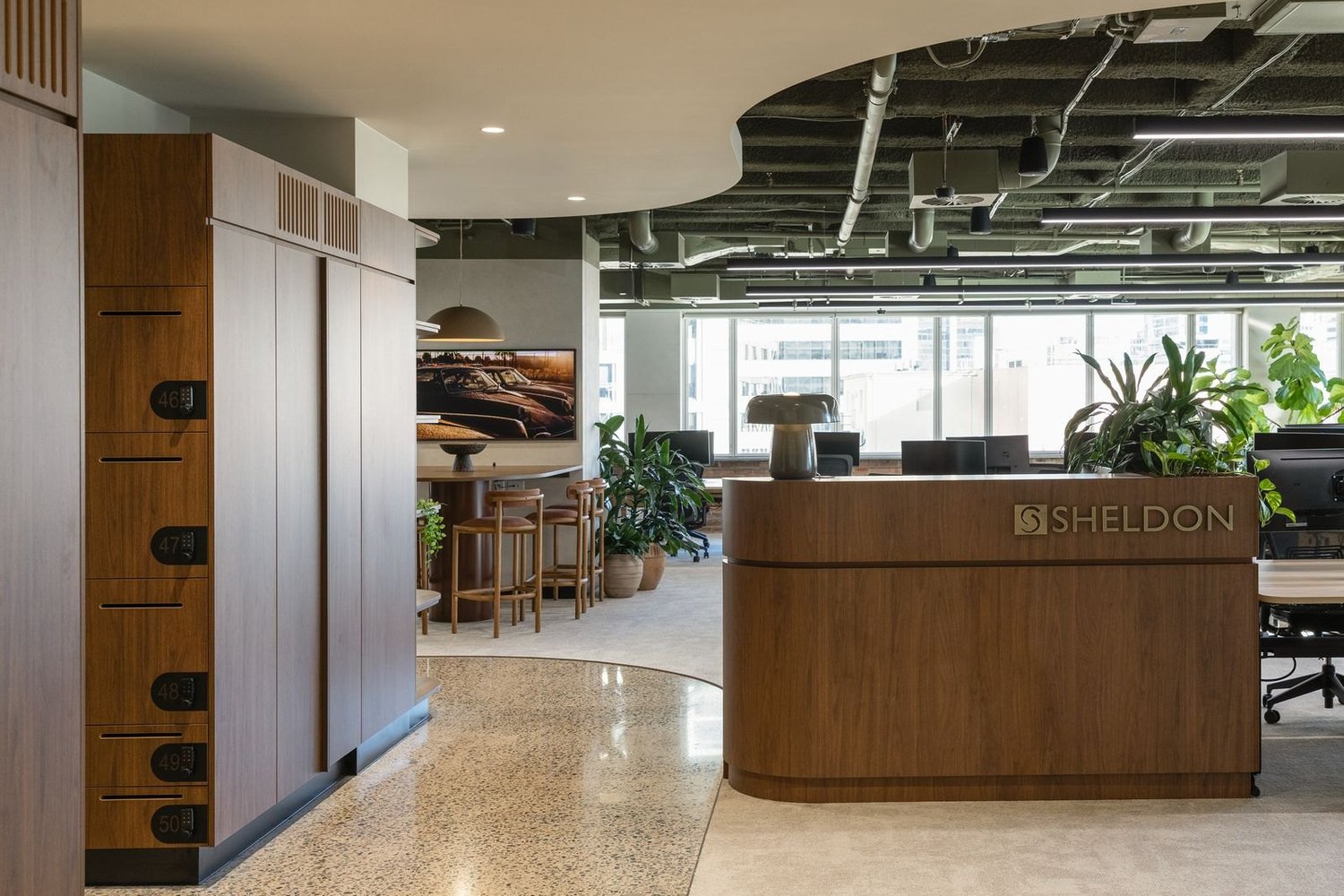
The bands to specify are already written down. WELL v2 feature S06 Minimum Background Sound sets 40 to 45 dBA across open work areas and the narrower 40 to 42 dBA in focus rooms, and the point is holding the level, not just reaching it. We have commissioned and reported against those bands at GSK Melbourne, which holds WELL Certification at the Platinum level, at GSK Bangkok and Taipei, at SAP Melbourne, and at Sheldon Interiors. Valeo Technology’s own published typical figures for adaptive soundscaping give an STI change from approximately 0.75 to 0.45. They are typical values rather than a measured project dataset. They illustrate the mechanism; the result on a particular floor depends on its acoustic conditions. The direction of that change is the difference between a conversation you follow without trying and one you have to work to make out. Confidential privacy in an enclosed room is a different target and is set with the acoustician.
The carbon side of the same trade
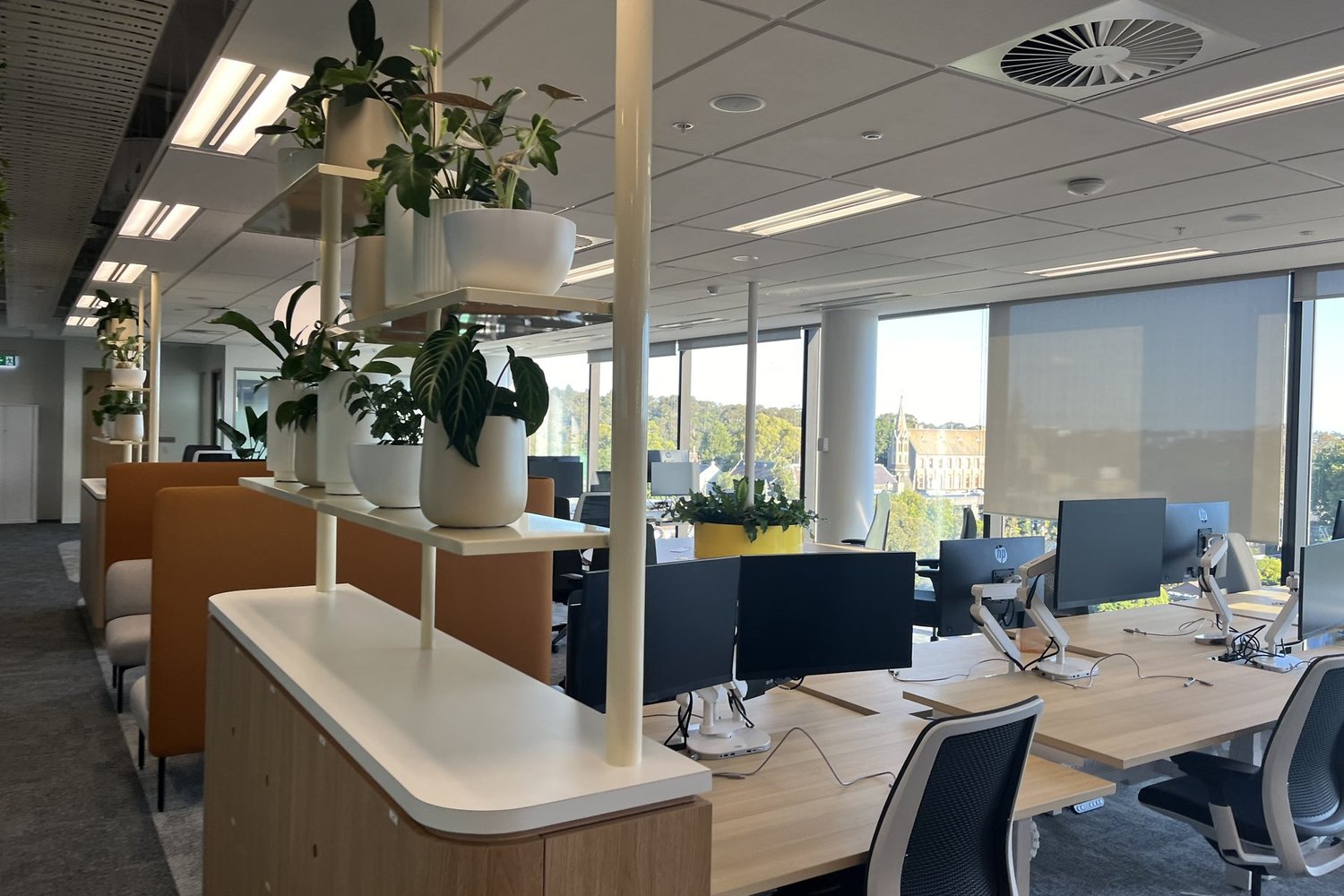
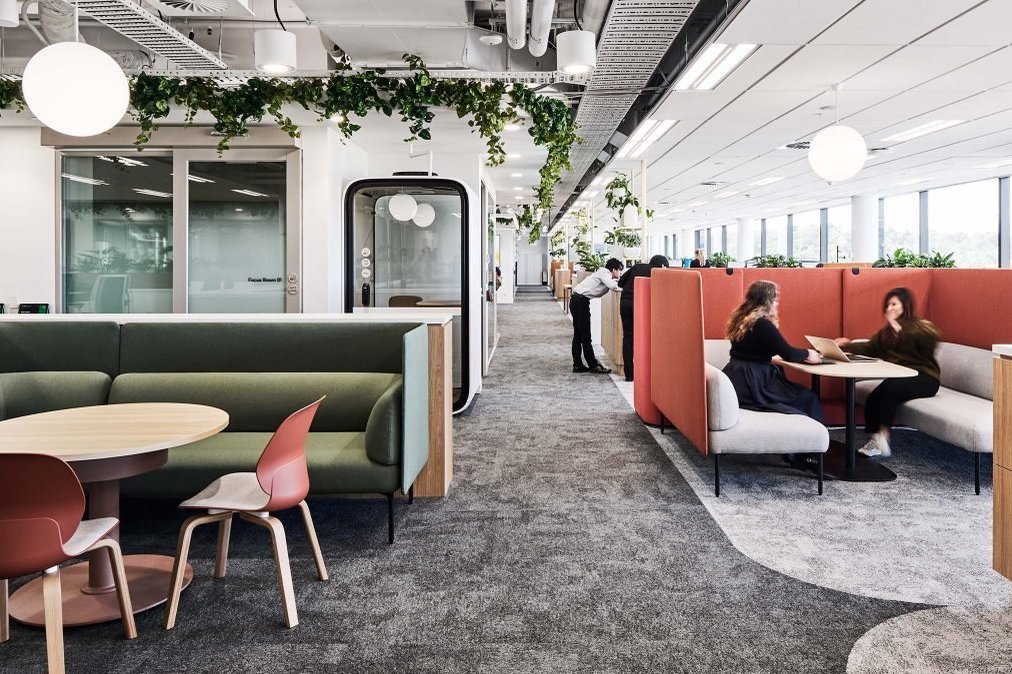
Higher isolation specifications can require additional material. Where the acoustic assessment permits a lighter construction, the associated embodied carbon may also fall. Cundall’s acousticians put the trade in front of the Australian Acoustical Society in 2024 (Alamshah, O’Connor and Bodsworth, Balancing Speech Privacy and Embodied Carbon Reduction in Building Design, Proceedings of Acoustics 2024). Their figures are for the UK market and indicative, and should be read that way. That is also only one side of the ledger. The other is the equipment: its embodied carbon, its replacement cycle and its energy in use. Ask your sustainability consultant to set the two against each other over a stated period before anyone claims a net carbon benefit.
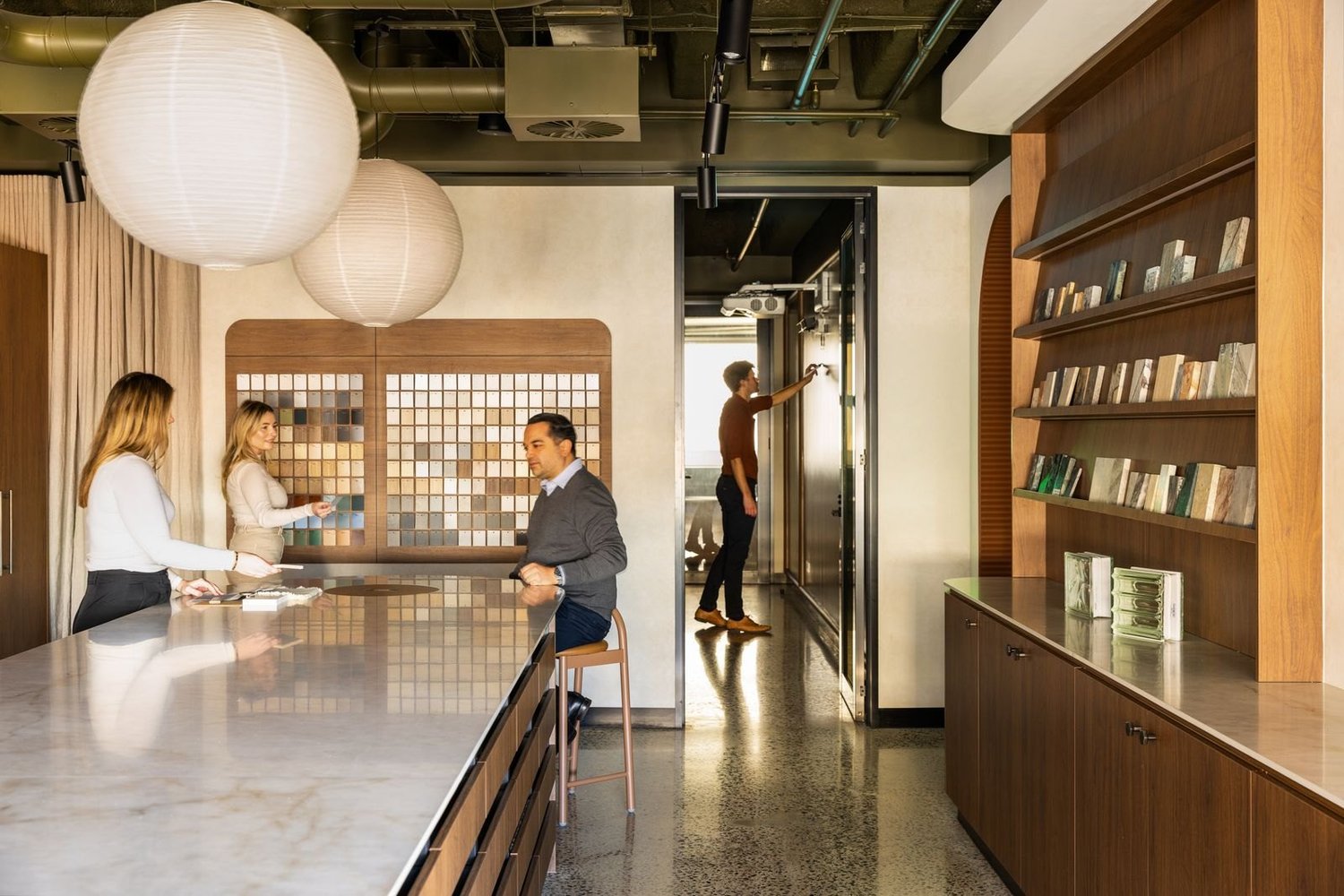
We have delivered that version of the argument too. On Sheldon Interiors’ Sydney headquarters, certified WELL Gold and designed toward a 5 Star Green Star rating, the acoustic design was coordinated so that soundscaping worked alongside the physical acoustic treatment. Green Star rewards using less; WELL rewards how the space treats the people in it; sound was part of how the project reconciled them.
How a quantity surveyor models it
Set the privacy target by zone, with the acoustician, rather than for the floor as a whole.
Design the background sound level per zone, using the S06 bands.
Ask the acoustician to re-derive the isolation needed to hit the privacy target at that raised background, rather than against the background the project would otherwise have assumed. The difference against the proposed design is the change that assessment permits.
Cost that delta: partition ratings, meeting-room glazing, wall build-ups, door and glazing seals, ceiling sealing, and, where the acoustician confirms it and the design team and client agree, the enclosed rooms that turn out not to be needed.
Compare the approved construction saving with the installed and commissioned system cost to establish the upfront difference.
Assess licensing, maintenance, energy and replacement separately over the project’s evaluation period.
Treat potential reuse at a later fitout as a separate future benefit, allowing for reassessment, relocation and recommissioning.
Why not simply mask it
Speech privacy is usually the first requirement, and the broadband bed is what delivers it. Like for like the speakers, cabling and installation are much the same, so we are often competitive with a masking-only quote. A modern masking system can track the room and equalise per zone, and so can this. The difference is what is playing. A conventional system’s spectral content is set at commissioning and its material never varies. A designed soundscape is nature-derived, generated on the on-premise hub rather than streamed from a playlist, so there is no loop length. Both approaches can contribute to S06, which sets background sound requirements; the difference is what the occupant hears while it does. The finance case does not have to cost you the experience case.
What we will not put a number on
You will notice this article carries no dollar figure, no payback period and no rate per square metre. That is deliberate. The dollar conclusion belongs to the quantity surveyor who models your isolation delta against our quote for your floor, and a saving quoted before that work is done is a guess. What we will give you is the mechanism, the bands, the projects we have commissioned and reported, and a system cost for your project to net against.
Send a floor plan and the speech-privacy targets your acoustician is working to. We will map the zones, propose the background sound levels, and give you the system cost.
Sources. Leesman Index workplace survey data. AS/NZS 2107:2016, Acoustics: Recommended design sound levels and reverberation times for building interiors. WELL v2 feature S06 Minimum Background Sound. Alamshah, O’Connor and Bodsworth (2024), Balancing Speech Privacy and Embodied Carbon Reduction in Building Design, Proceedings of Acoustics 2024, Australian Acoustical Society. The S06 commissioning and reporting at five projects and the glazing example are Valeo Technology’s own delivery record. The speech transmission index pair is Valeo Technology’s published typical figure for adaptive soundscaping, not a measured project dataset. Full citations on the evidence page.